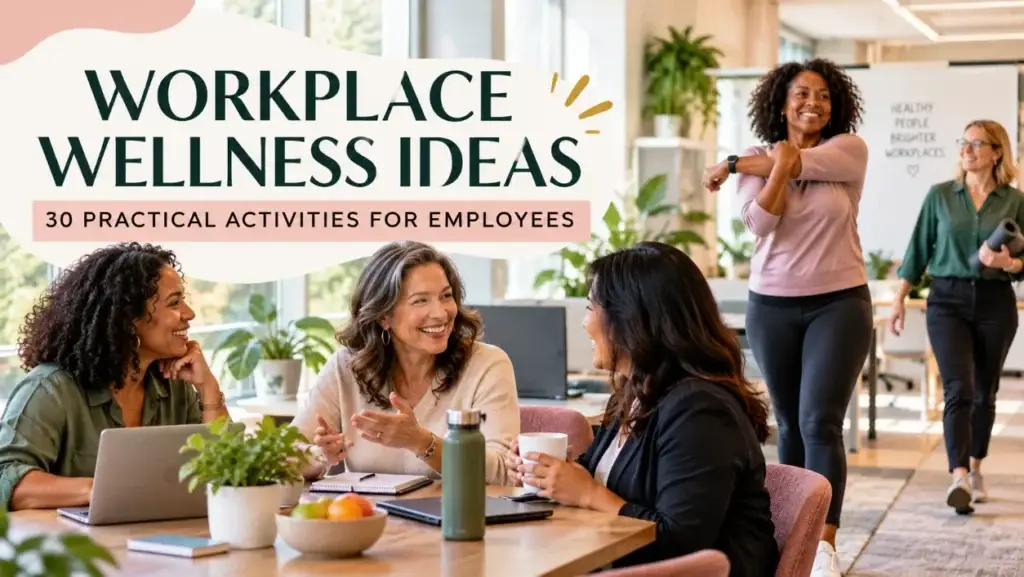
Looking for workplace wellness ideas that go beyond a step challenge, a bowl of fruit in the break room or another activity employees feel pressured to attend?
Workplace wellness can include movement, rest, connection, education, workplace culture, practical resources and experiences that help people feel better supported during the working week.
The best approach will look different from one organization to another.
A small office may benefit from protected lunch breaks and occasional wellness workshops. A remote team may need stronger communication boundaries and intentional connection. A residential community, HOA or larger employer may want a more structured calendar of wellness experiences throughout the year.
That is why useful wellness activities for employees should start with the people, environment and goals rather than copying whatever another company is doing.
Below are 30 practical workplace wellness ideas for onsite, remote and hybrid teams, followed by guidance for choosing the right activities and building a more thoughtful approach to employee wellbeing.
Planning Wellness for a Workplace or Organization?
A long list of ideas can provide inspiration, but deciding what actually fits your people, goals, environment and resources requires more thought.
FlavHer helps businesses, employers, residential communities, HOAs and organizations shape women-focused wellness experience concepts through strategy, recommendations, resources and aligned provider connections where appropriate.
What Is Workplace Wellness?
Workplace wellness is broader than fitness activities.
It can include programs, practices, policies, experiences and environmental changes that support worker safety, health and wellbeing.
That might involve:
- making it easier for employees to take reasonable breaks,
- creating opportunities for movement,
- providing practical wellness education,
- supporting social connection,
- reviewing communication expectations,
- improving the work environment,
- offering useful employee resources, and
- creating optional wellness experiences employees can choose to join.
This broader view matters.
NIOSH’s Total Worker Health approach emphasizes that worker wellbeing is influenced not only by individual behaviors but also by the way work is designed, managed and organized.
That means a lunchtime wellness workshop may be useful, but it should not be treated as a substitute for addressing unreasonable workload, poor access to breaks, unsafe conditions or other workplace problems.
If you want a clearer introduction to the broader concept, read our guide to the difference between health and wellness.
30 Workplace Wellness Ideas and Activities for Employees
Movement and Physical Wellbeing
1. Walking Meetings
Best for: Small meetings, one-to-ones and brainstorming conversations
Cost: Free
Format: Onsite or remote
When a meeting does not require screens, presentations or extensive note-taking, consider giving participants the option to walk while they talk.
An onsite team might walk around the building or outside where appropriate.
Remote employees can join an audio call while walking in a suitable environment.
Walking meetings should remain optional because not every employee, meeting or physical environment is suitable for them.
2. Short Movement Breaks
Best for: Desk-based teams and long periods of sedentary work
Cost: Free
Format: Onsite, remote or hybrid
Build permission for short movement breaks into the working day.
Employees might stand, walk, stretch or choose another comfortable form of movement.
The goal is not to make employees exercise on command. It is to make brief changes of position and movement easier when their role allows it.
3. Optional Guided Movement Sessions
Best for: Organizations that want a shared wellness experience
Cost: Low to moderate
Format: Onsite or virtual
An optional beginner-friendly movement session can create a shared break in the week.
Depending on the audience, an organization might explore yoga, mobility, stretching, low-impact movement or another appropriate format.
Formal fitness or movement instruction should be delivered by an appropriately qualified provider.
FlavHer’s role, where relevant, can focus on helping shape the wellness experience and connect organizations with aligned providers rather than implying that FlavHer personally delivers every specialist service.
4. Workspace Comfort Check
Best for: Office and remote employees
Cost: Free to moderate
Format: Onsite, remote or hybrid
Invite employees to review basic aspects of their work setup such as:
- screen position,
- lighting,
- frequently used equipment,
- workspace clutter, and
- whether their current setup creates obvious discomfort.
Organizations with formal ergonomic concerns should use appropriately qualified occupational-health, safety or ergonomic professionals.
5. Outdoor Breaks
Best for: Teams with safe access to outdoor space
Cost: Free
Format: Onsite or remote
Encourage employees to take part of an available break outdoors when location, weather, safety and job responsibilities allow.
That could mean eating lunch outside, taking a short walk or simply stepping away from the usual workspace for a few minutes.
Rest, Recovery and Better Workday Boundaries
6. Protected Lunch Breaks
Best for: Almost every workplace
Cost: Free
Format: All work environments
One of the simplest workplace wellness ideas is also one of the easiest to undermine.
If employees technically have a lunch break but meetings, workload or workplace culture make it difficult to use, adding more wellness activities may not solve the real problem.
Review whether employees can reasonably take the breaks already available to them.
7. Meeting-Free Focus Blocks
Best for: Knowledge workers and meeting-heavy teams
Cost: Free
Format: Onsite, remote or hybrid
Consider protecting certain blocks of time from routine meetings.
This can create space for concentrated work and reduce the constant switching between calls, messages and individual tasks.
The exact schedule should reflect the organization rather than imposing the same system on every team.
8. Five-Minute Reset Periods
Best for: Busy teams that cannot commit to long activities
Cost: Free
Format: All environments
A five-minute reset can be intentionally simple.
Employees might:
- step away from a screen,
- walk,
- stretch,
- sit quietly,
- get water, or
- prepare for the next task.
If everyday fatigue is a common concern among your audience, FlavHer’s guide to a women’s energy boost explores practical habits around food, movement, rest and everyday energy.
9. Better After-Hours Communication Boundaries
Best for: Remote, hybrid and always-connected teams
Cost: Free
Format: All environments
Review whether employees feel expected to respond to ordinary nonurgent messages outside their normal work hours.
Simple improvements may include clearer expectations around response times, delayed-send functions and distinguishing genuinely urgent communication from work that can wait.
This is a workplace practice rather than a one-off activity, but it can be more meaningful than adding another wellness event to the calendar.
10. Quiet or Recharge Space
Best for: Larger onsite workplaces
Cost: Low to moderate
Format: Onsite
If space allows, consider providing an area where employees can briefly step away from busy communal spaces.
The room does not need to become a clinical or therapeutic environment.
It can simply be a quieter setting for an ordinary break.
Food, Hydration and Everyday Energy
11. Better Snack Options
Best for: Offices that already provide snacks
Cost: Low to moderate
Format: Onsite
If the workplace already provides food, offer variety rather than deciding there is one universally “healthy” choice.
Depending on the environment, options might include fruit, yogurt, nuts, whole-grain snacks or other practical foods employees actually want.
Consider allergies, cultural preferences and dietary needs where relevant.
12. Accessible Hydration
Best for: Most onsite workplaces
Cost: Low
Format: Onsite
Make drinking water reasonably accessible during the workday.
This might involve water stations, easy refill access or simply making sure employees can reasonably leave their work area when needed.
Avoid turning hydration into a contest where employees are encouraged to consume arbitrary amounts of water.
13. Practical Nutrition Education
Best for: Organizations requesting educational wellness programming
Cost: Moderate
Format: Onsite or virtual
An educational session can focus on practical themes such as:
- building satisfying meals during busy weeks,
- planning portable lunches,
- understanding everyday nutrition basics, or
- reducing the pressure to pursue extreme diet rules.
Nutrition education should be provided by an appropriately qualified professional when specialized advice is involved.
14. Recipe Exchange
Best for: Community-building
Cost: Free
Format: Onsite, remote or hybrid
Create an optional shared collection of recipes employees enjoy making.
The goal is not to judge whose recipe is healthiest.
It can simply be a way to exchange practical ideas while learning about different tastes and cultures.
15. Lunch Away From the Screen
Best for: Desk-based teams
Cost: Free
Format: Onsite or remote
Encourage employees to spend at least part of their lunch break away from work screens when their role makes that possible.
This works best when the organization avoids routinely scheduling meetings over lunch.
Connection and Workplace Community
16. Coworker Appreciation
Best for: Building recognition and connection
Cost: Free
Format: All environments
Create simple ways for employees to recognize useful contributions that may otherwise go unnoticed.
That might include thanking someone for sharing knowledge, helping solve a problem, supporting another team member or making a difficult day easier.
Connection is one reason wellness should not be reduced entirely to food and fitness. FlavHer explores the broader role of connection in Creating Stronger Communities Through Connection.
17. Coffee or Tea Connections
Best for: Teams that need more informal interaction
Cost: Free to low
Format: Onsite or virtual
Offer optional short coffee or tea conversations between coworkers who may not usually interact.
Keep them informal.
Not every workplace connection activity needs an agenda, icebreaker or formal presentation.
18. Cross-Team Introductions
Best for: Larger organizations
Cost: Free
Format: All environments
Employees working in separate departments may rarely understand what other teams actually do.
Occasional short cross-team introductions can improve familiarity and help people build relationships outside their immediate group.
19. Community or Volunteer Activities
Best for: Organizations interested in community engagement
Cost: Varies
Format: Mostly onsite/community-based
Examples might include:
- a local volunteer day,
- a community cleanup,
- assembling care packages,
- a donation drive, or
- supporting a local organization.
When possible, avoid making employees donate their own money or unpaid personal time in order to participate.
20. Team Wellness Experiences
Best for: Organizations seeking something more intentional than a routine office activity
Cost: Moderate
Format: Onsite, offsite or virtual
A wellness experience can combine education, connection and an activity around a specific theme.
For example, an organization may want an experience focused on women’s wellness, healthy aging, movement, recovery, nourishment, confidence or another relevant topic.
This is one of the areas where thoughtful planning matters most because the experience should fit the audience rather than feel like a generic corporate wellness package.
Want to Create a More Intentional Wellness Experience?
FlavHer helps businesses, employers, HOAs, residential communities and organizations shape women-focused wellness experiences around their people, goals, setting and available resources.
Support can include strategy, experience concepts, recommendations, resources and aligned independent provider connections where appropriate.
Wellness Education and Personal Development
21. Wellness Lunch-and-Learns
Best for: Practical education
Cost: Low to moderate
Format: Onsite or virtual
Lunch-and-learns can cover a focused wellness topic without trying to fit an entire wellbeing program into one session.
Topics might include:
- everyday movement,
- sleep education,
- meal planning,
- healthy aging,
- stress education,
- women’s wellness,
- financial wellbeing, or
- personal wellness planning.
Specialized subjects should be led by appropriately qualified professionals.
22. Sleep Education
Best for: General wellness education
Cost: Low to moderate
Format: Onsite or virtual
General sleep education can focus on everyday routines, workplace factors that affect rest and when persistent sleep concerns may warrant professional guidance.
A workplace should not monitor individual employees’ sleep or treat education as medical care.
23. Financial Wellbeing Education
Best for: Broad employee wellbeing programs
Cost: Moderate
Format: Onsite or virtual
Financial wellbeing can be part of a broader workplace wellness strategy.
An organization might offer sessions on budgeting, benefits education, retirement planning or other practical financial topics.
Use suitably qualified financial professionals for individualized or regulated financial guidance.
24. Women’s Wellness and Healthy-Aging Education
Best for: Organizations seeking women-focused wellness experiences
Cost: Moderate
Format: Onsite or virtual
Organizations with significant numbers of women in their workforce or community may want wellness programming that acknowledges different life stages and priorities.
Topics might include everyday wellbeing through midlife, healthy-aging habits, energy, movement, confidence, recovery, connection and creating sustainable personal wellness routines.
Medical subjects should remain within the scope of appropriately licensed healthcare professionals.
FlavHer can help organizations think through the experience concept and identify aligned resources or providers rather than presenting general wellness programming as medical care.
25. Personal Wellness Planning
Best for: Helping employees choose their own priorities
Cost: Free to low
Format: All environments
Instead of telling every employee to focus on the same behavior, introduce a framework that allows individuals to identify the area of everyday wellbeing most relevant to them.
That might include movement, meals, rest, connection, routines or another personal priority.
For an individual framework, see our guide to creating a personal wellness plan.
Larger Workplace Wellness Activities and Initiatives
26. Wellness Wednesday
Best for: Organizations that want a recurring rhythm
Cost: Free to moderate
Format: Onsite, remote or hybrid
Use one day of the week as a recurring reminder or opportunity for wellness.
The activity might change from week to week:
- a walking meeting,
- a five-minute reset,
- a connection activity,
- a lunch-and-learn, or
- an occasional wellness experience.
We have a separate guide with 25 Wellness Wednesday ideas for work if this is the format you want to build around.
27. Workplace Wellness Challenges
Best for: Short-term participation campaigns
Cost: Free to moderate
Format: All environments
A challenge works differently from a one-time wellness activity because employees participate repeatedly over a defined period.
Examples include movement breaks, connection challenges, wellness bingo, outdoor breaks or personal wellness goals.
If you want to run something over several days or weeks, explore our wellness challenge ideas for the workplace.
28. Monthly Wellness Experiences
Best for: Organizations wanting variety without weekly programming
Cost: Moderate
Format: Onsite, virtual or hybrid
Choose one meaningful experience each month rather than filling every week with another wellness task.
A quarterly or monthly calendar could rotate between themes such as:
- movement,
- recovery,
- nutrition education,
- connection,
- women’s wellness,
- healthy aging, or
- personal development.
This format can be useful for organizations that want wellness to feel intentional but manageable.
29. Employee Wellness Listening Exercise
Best for: Organizations unsure where to begin
Cost: Free to low
Format: All environments
Before investing in new employee wellness activities, ask employees what would actually be useful.
This might involve:
- a short anonymous survey,
- a few optional focus discussions,
- voting between potential themes, or
- reviewing participation in previous activities.
NIOSH’s Total Worker Health guidance emphasizes worker participation, which is one reason employee input should be part of planning rather than an afterthought.
Avoid asking for unnecessary private health information.
30. Quarterly or Annual Wellness Plan
Best for: Organizations ready to move beyond isolated activities
Cost: Varies
Format: Organization-wide
Rather than choosing random workplace wellness activities throughout the year, create a simple calendar built around a few goals.
For example:
Quarter 1: everyday energy and recovery
Quarter 2: movement and workplace habits
Quarter 3: connection and community
Quarter 4: reflection, healthy aging or planning for the year ahead
The point is not to fill every available date.
It is to make activities feel connected rather than random.
Not Sure Which Workplace Wellness Ideas Fit Your Organization?
Some organizations need one strong experience. Others need a recurring activity, a short challenge or a broader wellness calendar.
FlavHer’s Wellness Experience Consulting helps businesses, employers, residential communities, HOAs and organizations think through women-focused wellness concepts based on their audience, goals, environment and resources.
Consulting may include strategy, experience concepts, recommendations, resources and connections with aligned independent providers when appropriate.
How to Choose the Right Wellness Activities for Employees
You do not need to implement all 30 ideas.
Start by asking what problem or opportunity you are trying to address.
| Goal | Ideas to Consider |
|---|---|
| More movement | Walking meetings, movement breaks, guided movement |
| Better recovery during the workday | Protected breaks, reset periods, meeting-free blocks |
| Stronger connection | Appreciation, coffee connections, community activities |
| Practical education | Lunch-and-learns, women’s wellness, sleep or financial education |
| Ongoing engagement | Wellness Wednesdays, challenges, monthly experiences |
| Longer-term strategy | Employee listening, quarterly wellness planning |
Low-Cost Workplace Wellness Ideas
A useful wellness program does not automatically require a large budget.
Some of the lowest-cost options include:
- walking meetings,
- protected lunch breaks,
- short movement breaks,
- meeting-free focus time,
- outdoor breaks,
- coworker appreciation,
- recipe exchanges,
- coffee connections,
- personal wellness planning, and
- employee listening exercises.
What matters is whether the workplace actually supports participation.
A free activity that employees do not have time or permission to use is not automatically a good wellness initiative.
Workplace Wellness Ideas for Remote Teams
Remote wellness does not need to mean adding more video calls.
Useful remote options include:
- audio walking meetings,
- protected breaks,
- digital communication boundaries,
- optional virtual education sessions,
- personal wellness planning,
- coffee connections,
- movement challenges, and
- remote-friendly wellness experiences.
Where possible, some remote wellness activities should give employees a reason to step away from their screens rather than spend even more time online.
Workplace Wellness Ideas for Hybrid Teams
A hybrid program should not make remote employees feel like secondary participants.
When choosing an activity, ask whether both groups have a meaningful way to join.
| Activity | Onsite Option | Remote Option |
|---|---|---|
| Movement break | Walk around the workplace | Walk near home or use another movement option |
| Connection | Coffee with a coworker | Optional virtual coffee |
| Wellness education | Attend onsite | Join virtually or access equivalent material |
| Challenge | Complete activities onsite | Complete equivalent activities remotely |
Workplace Wellness Is More Than Activities
This is one of the most important parts of workplace wellness planning.
Employees experience their workplace through much more than events and wellness calendars.
They are also affected by:
- workload,
- staffing,
- schedule expectations,
- access to breaks,
- management practices,
- psychological and physical safety,
- communication expectations,
- flexibility,
- workplace relationships, and
- whether employees have meaningful input.
NIOSH’s Healthy Work Design and Well-Being program specifically looks at the design of work, management practices and the physical and psychosocial work environment when considering worker wellbeing.
So an organization should avoid using wellness activities as decoration around an unhealthy work environment.
A meditation session cannot solve chronic understaffing.
A hydration challenge cannot fix lack of reasonable break access.
A workshop on sleep does not resolve unnecessary late-night work expectations.
Activities can complement good workplace practices, but they should not replace them.
Common Workplace Wellness Mistakes
Choosing Activities Without Asking Employees
What leadership thinks employees want and what employees actually find useful may be very different.
Ask first.
Making Participation Feel Mandatory
Wellness should not become an unofficial test of employee enthusiasm.
NIOSH describes Total Worker Health-aligned programs as voluntary and participatory.
Provide choices and reasonable alternatives.
Making Every Idea About Fitness
Movement can be valuable, but workplace wellness can also include recovery, connection, education, work design, financial wellbeing and community.
Using the Same Idea for Every Workforce
A remote technology company, manufacturing environment, small office, healthcare organization and residential community do not have identical needs.
Adjust the format to the people and environment.
Collecting Unnecessary Personal Health Information
Most ordinary workplace wellness activities do not require employees to disclose medical diagnoses, weight, body measurements or other sensitive health information.
If you do not need the information, do not collect it.
Expecting Wellness to Happen Entirely Outside Work
If every wellness initiative requires employees to give up lunch, arrive early or stay late, participation may remain low.
Where practical, make space for wellness within the working day.
Running One Activity and Expecting Culture to Change
A single wellness event can be enjoyable.
It is not the same thing as a healthy workplace culture.
Frequently Asked Questions About Workplace Wellness Ideas
What are good workplace wellness ideas?
Good options include walking meetings, movement breaks, protected lunch periods, wellness education, employee challenges, connection activities, wellness experiences, better communication boundaries, personal wellness planning and employee listening exercises. The right option depends on the people, goals and work environment.
What are some easy wellness activities for employees?
Low-barrier options include short walking breaks, lunch away from work screens, coworker appreciation, outdoor breaks, coffee connections, five-minute resets and personal wellness planning.
What are low-cost employee wellness activities?
Walking meetings, movement breaks, employee appreciation, recipe exchanges, focus blocks, outdoor breaks and simple wellness challenges can often be implemented with little direct cost.
What workplace wellness activities work for remote employees?
Remote teams can use walking meetings, digital-boundary practices, virtual education, personal goals, wellness challenges, optional coffee connections and activities employees can complete away from their screens.
Do workplace wellness programs have to focus on physical health?
No. Workplace wellbeing can include physical, social, educational, financial and organizational factors. Work design, management practices, employee voice and the overall work environment can also affect worker wellbeing.
Should workplace wellness activities be mandatory?
Wellness activities are generally better offered as voluntary opportunities with meaningful choices and alternatives rather than forced participation.
How often should a company run workplace wellness activities?
There is no single schedule for every organization. Some workplaces may use small weekly activities, while others may prefer one meaningful monthly experience or a quarterly wellness plan. Choose a schedule your organization can maintain without turning wellness into another source of pressure.
How do we know which wellness activities employees want?
Ask them. A short survey, optional discussion or simple vote between several options can provide useful direction before you invest significant time or money.
Can a company hire someone to help plan workplace wellness experiences?
Yes. Organizations may work with wellness consultants or experience-planning partners to help identify goals, shape concepts, recommend resources and coordinate with appropriately qualified providers where specialized services are needed.
Build Workplace Wellness Around Your People
You do not need all 30 ideas.
You need the right ideas for your people.
Start by understanding your audience.
Choose a clear goal.
Ask employees what they value.
Keep participation accessible and voluntary.
Make sure the workplace itself supports the behaviors you are encouraging.
Then choose activities that fit naturally into the environment rather than creating wellness for the sake of filling a calendar.
The result may be one meaningful experience, a recurring Wellness Wednesday, a short employee challenge or a broader annual wellness plan.
What matters is that the strategy feels relevant to the people it is intended to support.
Shape a Wellness Experience That Fits Your Organization
If your business, workplace, HOA, residential community or organization wants to create more intentional women-focused wellness experiences, FlavHer can help shape the concept.
Wellness Experience Consulting can include strategy, experience ideas, recommendations, resources and aligned independent provider connections where appropriate.
Sources & Further Reading
- NIOSH – Total Worker Health
- NIOSH – Total Worker Health Frequently Asked Questions
- NIOSH – Healthy Work Design and Well-Being Program
Important: This article provides general workplace wellness information only and is not medical, mental-health, nutritional, fitness, financial, legal, human-resources or occupational-safety advice. Organizations should consider employee needs, accessibility, workplace policies, safety requirements and applicable laws when developing workplace wellness activities. Qualified professionals should provide specialized services where appropriate.