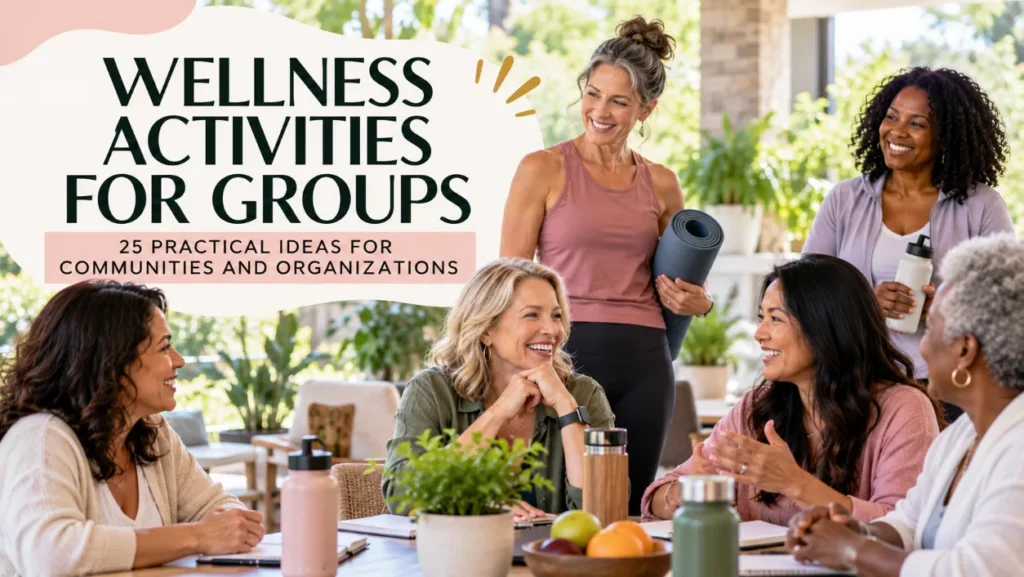
Looking for wellness activities for groups that people will actually want to join?
Group wellness can take many forms.
It might be a walking group in a residential community, a women’s wellness workshop hosted by an association, a relaxing activity at a nonprofit event, a wellness day for community members or a series of experiences designed around connection, movement and everyday wellbeing.
The right activity depends on the group.
A homeowners association may want something accessible for residents with different ages and abilities. A women’s organization may want an experience centered on midlife wellness or healthy aging. A nonprofit may be looking for an activity that brings people together without requiring a large budget.
That is why group wellness should not begin with:
“What activity is popular right now?”
A better question is:
“What would be useful, enjoyable and appropriate for this particular group?”
Below are 25 practical wellness activities for communities, associations, nonprofits, women’s organizations and other groups, along with guidance for choosing a format that fits your audience.
Planning a Wellness Experience for a Group?
FlavHer helps HOAs, residential communities, nonprofits, associations, women’s organizations, businesses and other groups shape women-focused wellness experiences around their audience, goals, environment and available resources.
Support may include strategy, experience concepts, recommendations, resources and connections with aligned independent providers where appropriate.
What Are Group Wellness Activities?
Group wellness activities are organized experiences that support one or more areas of wellbeing while allowing people to participate alongside others.
They can include:
- movement,
- social connection,
- relaxation and recovery,
- education,
- creativity,
- reflection,
- community involvement, or
- practical everyday wellness habits.
Group wellness does not have to mean an intense fitness class.
It also does not have to mean asking people to share personal information in front of strangers.
A useful experience can be as simple as a community walk, an educational session, a creative workshop or a shared activity designed to make connection easier.
CDC guidance on social connection notes that community organizations and group settings can play a role in creating opportunities for people to form meaningful connections.
Walking and other activity groups can also provide social support while helping people participate in physical activity together.
FlavHer explores this broader relationship between wellbeing and connection in Creating Stronger Communities Through Connection.
Who Can Use Wellness Activities for Groups?
Group wellness is not limited to employers.
These ideas can be adapted for many types of organizations and communities.
| Group | Possible Wellness Goal |
|---|---|
| HOAs and residential communities | Help residents connect and make community wellness more accessible |
| Women’s organizations | Create experiences around women’s wellness, healthy aging, connection or personal growth |
| Nonprofits | Support community engagement, education or member wellbeing |
| Associations and clubs | Add meaningful wellness programming to meetings or events |
| Community organizations | Build connection and provide practical wellness resources |
| Retreats and events | Create a memorable wellness experience within a larger gathering |
25 Wellness Activities for Groups
Movement and Outdoor Group Wellness Activities
1. Community Walking Group
Best for: HOAs, neighborhoods, clubs and community organizations
Cost: Free
Group size: Small to large
A walking group is one of the simplest ways to combine movement and social connection.
The route does not need to be long.
A community might organize:
- a short weekday morning walk,
- a weekend neighborhood walk,
- a park walk, or
- a seasonal walking series.
Choose routes with accessibility, safety, weather and different mobility levels in mind.
Where walking is not appropriate for every participant, provide another way to join or connect.
2. Beginner-Friendly Group Movement
Best for: Groups wanting an organized physical activity
Cost: Low to moderate
Group size: Small to medium
A beginner-friendly movement session may include gentle mobility, stretching, low-impact movement or another accessible format.
A qualified instructor should lead specialized movement or fitness sessions.
The goal should be participation rather than performance.
3. Nature Walk
Best for: Communities with safe access to parks or trails
Cost: Free to low
Group size: Small to medium
A nature walk can combine movement, conversation and time away from the usual indoor environment.
It may work particularly well for:
- community groups,
- women’s organizations,
- retreats, or
- association events.
Keep the route appropriate to the group and avoid assuming everyone has the same mobility or fitness level.
4. Stretch and Mobility Session
Best for: Events, meetings and community gatherings
Cost: Low to moderate
Group size: Small to large
A short guided mobility session can work as part of a longer event without requiring an entire workout.
For example, a qualified provider might lead a 15- or 20-minute beginner-friendly session between educational or social portions of a gathering.
5. Group Dance or Movement Experience
Best for: Social groups and celebratory wellness events
Cost: Moderate
Group size: Medium to large
Movement does not always need to feel like exercise.
A beginner-friendly dance session can combine music, movement and connection in a more social format.
Choose an instructor and activity style that fits the audience rather than assuming every group will be comfortable with the same format.
Connection and Community Wellness Activities
6. Wellness Coffee or Tea Social
Best for: HOAs, clubs, associations and women’s groups
Cost: Low
Group size: Small to medium
Not every wellness activity needs a formal instructor.
A simple coffee or tea gathering can create an easy setting for conversation and connection.
You might add one optional prompt such as:
- What is one habit that helps your week feel better?
- What does rest look like for you?
- What is one thing you want to make more time for?
Avoid forcing participants to discuss private health experiences.
7. Appreciation Circle
Best for: Established groups
Cost: Free
Group size: Small
Invite participants to recognize something they appreciate about the group, community or people around them.
This works best when participation is optional and the prompts stay positive and low-pressure.
8. Community Storytelling Session
Best for: Associations, women’s organizations and community groups
Cost: Free to moderate
Group size: Small to medium
Choose a broad theme and invite people who want to participate to share short stories.
Topics might include:
- a lesson learned during a life transition,
- a tradition that supports wellbeing,
- a meaningful community experience, or
- something that has helped them feel more connected.
The activity should allow people to listen without requiring everyone to share.
9. Community Service Activity
Best for: Nonprofits, associations, HOAs and clubs
Cost: Varies
Group size: Medium to large
Wellness can include purpose and community involvement.
A group might:
- support a local food program,
- assemble care packages,
- participate in a community cleanup,
- support an existing nonprofit initiative, or
- volunteer together.
Choose opportunities that are genuinely useful to the organization being supported.
10. Wellness Buddy Check-In
Best for: Groups already comfortable with one another
Cost: Free
Group size: Any
Pair willing participants for simple, occasional check-ins.
The purpose is not to make one participant responsible for another person’s health.
Instead, a buddy might simply ask:
“How is the goal you chose going?”
or:
“Is there anything you want encouragement with this week?”
Relaxation and Reset Activities for Groups
11. Guided Relaxation Session
Best for: Wellness days, conferences and community events
Cost: Low to moderate
Group size: Small to large
A short guided relaxation experience may help create a quieter moment within a busy event.
This might involve gentle relaxation techniques led by an appropriately qualified facilitator.
Provide another option for participants who prefer not to take part.
12. Beginner Mindfulness or Meditation Session
Best for: Groups interested in a quieter wellness experience
Cost: Low to moderate
Group size: Small to large
A short guided mindfulness or meditation session can work well when expectations are clear and participation remains optional.
It should not be presented as medical or mental-health treatment.
13. Digital Pause
Best for: Retreats, workshops and longer gatherings
Cost: Free
Group size: Any
Create a short period where participants are invited to put phones and laptops away.
That might be:
- during lunch,
- for a 20-minute outdoor break,
- during a creative activity, or
- for one portion of a retreat.
Make it an invitation rather than policing people’s devices.
14. Group Journaling and Reflection
Best for: Women’s groups, retreats and personal-development events
Cost: Free to low
Group size: Small to medium
Provide participants with a few reflection prompts and time to write privately.
Prompts might include:
- What currently supports your wellbeing?
- What feels harder than it needs to?
- What would you like more of in your next season?
- What is one small change that feels realistic?
Sharing responses should always be optional.
For additional ideas, see FlavHer’s self-care journal prompts.
15. Quiet Reset Space
Best for: Larger events and wellness days
Cost: Low
Group size: Large events
Not everyone wants continuous group interaction.
If the venue allows, create a quieter area where attendees can briefly step away from the main activity.
Comfortable seating, water and a calmer environment may be enough.
Educational Wellness Activities for Groups
16. Practical Wellness Workshop
Best for: Associations, nonprofits and community organizations
Cost: Moderate
Group size: Small to large
A workshop can focus on one clear topic rather than trying to cover every area of wellness at once.
Possible themes include:
- everyday wellness planning,
- healthy routines,
- movement,
- energy and recovery,
- connection, or
- healthy aging.
Use appropriately qualified professionals when the topic involves specialized medical, nutritional, fitness, mental-health or other regulated guidance.
17. Women’s Wellness and Healthy-Aging Session
Best for: Women’s organizations, residential communities and associations
Cost: Moderate
Group size: Small to large
A women-focused wellness experience may explore practical themes related to:
- midlife wellbeing,
- everyday energy,
- movement,
- recovery,
- confidence,
- healthy aging,
- connection, or
- personal wellness planning.
The experience should clearly distinguish general wellness education from medical care.
This kind of programming aligns especially well with FlavHer’s focus on practical wellness for women.
18. Cooking Demonstration or Nutrition Workshop
Best for: Community wellness days and associations
Cost: Moderate
Group size: Small to medium
A qualified provider might lead a practical cooking demonstration or general nutrition education session.
Useful topics could include:
- simple meals for busy weeks,
- building a practical lunch,
- easy snack ideas, or
- meal-planning basics.
Avoid turning a group wellness session into individualized dietary treatment.
19. Sleep and Recovery Education
Best for: Adult community groups
Cost: Low to moderate
Group size: Small to large
A general educational session might cover everyday routines that support rest, common barriers to winding down and when persistent concerns should be discussed with a healthcare professional.
Keep the material educational rather than diagnostic.
20. Personal Wellness Planning Workshop
Best for: Groups that want participants to leave with something practical
Cost: Low to moderate
Group size: Small to medium
Instead of deciding the same wellness goal for everyone, help participants identify their own priorities.
They might consider:
- movement,
- food,
- rest,
- energy,
- connection,
- confidence,
- purpose, or
- another everyday wellbeing priority.
FlavHer’s personal wellness plan guide provides a useful framework for this approach.
Creative and Interactive Group Wellness Activities
21. Creative Wellness Workshop
Best for: Community events, women’s groups and retreats
Cost: Low to moderate
Group size: Small to medium
Creative activities can provide an alternative for groups that do not want fitness-based programming.
Depending on the audience, options might include:
- painting,
- floral arranging,
- collage,
- simple crafts,
- creative writing, or
- another hands-on activity.
The goal does not need to be producing perfect artwork.
The activity can simply offer time for creativity and social connection.
22. Group Wellness Bingo
Best for: HOAs, associations and community groups
Cost: Free to low
Group size: Medium to large
Create a bingo card with a mix of flexible activities.
Squares might include:
- take a short walk,
- drink water with a meal,
- call someone you care about,
- spend time outdoors,
- try a new recipe,
- write down something you appreciate, or
- attend one community activity.
Offer alternatives so participants can choose activities appropriate to their circumstances.
23. Wellness Stations
Best for: Larger community events
Cost: Moderate
Group size: Large
Instead of asking everyone to do the same activity at the same time, create several stations participants can move between.
For example:
- a reflection station,
- a hydration station,
- a movement station,
- a resource table,
- a creative activity, and
- a community-connection station.
This can give participants more choice and help accommodate different interests.
Want Something More Thoughtful Than a Generic Group Activity?
FlavHer can help organizations shape women-focused wellness experiences around the people who will actually attend.
That may include helping define the concept, select themes, structure the experience, recommend resources and connect with aligned independent providers where specialized facilitation is needed.
24. Group Wellness Challenge
Best for: Groups that meet or communicate regularly
Cost: Free to low
Group size: Any
A challenge gives participants a simple activity or theme to explore over several days or weeks.
Examples include:
- a walking challenge,
- a connection challenge,
- an outdoor-time challenge,
- a journaling challenge, or
- a choose-your-own wellness goal.
Keep participation supportive rather than designing the entire experience around one winner.
For longer-format inspiration, explore FlavHer’s 30-day wellness challenge ideas.
25. Group Wellness Day or Wellness Series
Best for: HOAs, associations, women’s organizations, nonprofits and community groups
Cost: Varies
Group size: Medium to large
Instead of relying on one isolated activity, combine several complementary experiences.
A wellness day might include:
Morning: beginner-friendly movement or a community walk
Midday: practical wellness education
Afternoon: creative or connection-based activity
Closing: reflection, resources or an invitation to continue one useful habit
A recurring series could use a different theme each month or quarter.
For example:
- movement,
- energy and recovery,
- connection,
- women’s wellness,
- healthy aging, or
- personal growth.
This format can turn group wellness from a random activity into a more intentional experience.
How to Choose the Right Wellness Activity for Your Group
Do not choose based only on what looks good in photos.
Consider the actual group.
1. Start With the Goal
Ask what you want the experience to accomplish.
Is the goal:
- connection?
- movement?
- relaxation?
- education?
- community building?
- women’s wellness?
- healthy aging?
- or simply providing an enjoyable shared experience?
A clear goal makes choosing the activity easier.
2. Consider the Group Size
An activity that works beautifully with eight people may feel awkward with eighty.
Small groups can support more conversation and reflection.
Larger groups may benefit from:
- stations,
- structured facilitation,
- shorter activities, or
- multiple participation options.
3. Think About Accessibility
Do not assume every participant:
- has the same mobility,
- has the same fitness level,
- can stand for long periods,
- is comfortable closing their eyes,
- wants physical contact, or
- wants to discuss personal experiences.
Where possible, provide meaningful alternatives.
4. Keep Participation Voluntary
A wellness activity becomes less welcoming when people feel forced to participate.
Allow people to:
- choose between activities,
- observe where appropriate,
- skip a prompt, or
- select an alternative.
5. Match the Activity to the Setting
A residential clubhouse, conference room, outdoor park, community center and retreat property all create different possibilities.
Consider:
- space,
- weather,
- noise,
- seating,
- privacy,
- accessibility, and
- available equipment.
6. Use Qualified Providers When Appropriate
Some group activities are simple community experiences.
Others require specialized knowledge.
Use appropriately qualified professionals for services involving areas such as:
- fitness instruction,
- nutrition counseling,
- mental-health services,
- medical education,
- specialized movement, or
- other regulated professional services.
FlavHer’s consulting role can include strategy, experience design concepts, recommendations and provider connections where appropriate without implying that FlavHer personally delivers every specialist activity.
Group Wellness Activities by Goal
| Goal | Activities to Consider |
|---|---|
| Movement | Walking group, mobility session, nature walk, dance |
| Connection | Coffee social, storytelling, buddy check-ins, community service |
| Relaxation | Guided relaxation, mindfulness, journaling, quiet reset space |
| Education | Wellness workshop, women’s wellness, sleep education, personal wellness planning |
| Creativity | Creative workshop, journaling, hands-on activities |
| Ongoing engagement | Wellness bingo, group challenge, recurring wellness series |
Low-Cost Wellness Activities for Groups
A useful group wellness experience does not automatically require a large budget.
Lower-cost ideas include:
- community walks,
- nature walks,
- coffee or tea socials,
- appreciation activities,
- digital pauses,
- group journaling,
- community service,
- wellness bingo,
- buddy check-ins, and
- simple group challenges.
The quality of the experience often depends more on how well it fits the group than how expensive it is.
Wellness Activities for Large Groups
For large groups, simplicity becomes more important.
Good options may include:
- short guided movement,
- a speaker or educational session,
- wellness stations,
- a community walk with multiple pace options,
- wellness bingo,
- a creative activity with clear instructions, or
- a wellness fair or multi-activity experience.
Avoid designing an experience where every participant needs extensive one-on-one attention from a single facilitator.
Wellness Activities for Small Groups
Smaller groups allow for more interaction.
Options may include:
- journaling and reflection,
- storytelling,
- a cooking demonstration,
- creative workshops,
- a guided nature walk,
- personal wellness planning, or
- a facilitated conversation around a wellness theme.
Group Wellness Should Build Connection Without Creating Pressure
A good group activity should not require people to perform wellness for one another.
Participants should not need to:
- share medical diagnoses,
- disclose private mental-health experiences,
- reveal their weight or body measurements,
- demonstrate a high fitness level,
- share deeply personal stories, or
- participate in physical contact they do not want.
Connection can come from much simpler experiences.
Walking together.
Learning something useful.
Creating something.
Helping the community.
Having a meaningful conversation.
Or simply spending time with people who share an interest or place.
That is consistent with the broader community approach FlavHer discusses in Strengthening Communities Through Shared Practices.
Planning Wellness for a Community, Association or Women’s Group?
You do not need to choose from a generic activity list and hope it works.
FlavHer’s Wellness Experience Consulting helps HOAs, residential communities, nonprofits, associations, women’s organizations and other groups shape women-focused wellness experiences around their audience, goals, setting and resources.
Support may include strategy, experience concepts, recommendations, resources and connections with aligned independent providers where appropriate.
Frequently Asked Questions About Wellness Activities for Groups
What are some good wellness activities for groups?
Good options include walking groups, beginner-friendly movement, nature walks, journaling, creative workshops, wellness education, community service, wellness bingo, mindfulness sessions and group wellness challenges. The best activity depends on the group’s goals, size, setting and participants.
What are easy wellness activities for a community group?
Community walks, coffee or tea gatherings, appreciation activities, journaling, recipe exchanges, outdoor gatherings and wellness bingo can all be relatively simple to organize.
What wellness activities work well for HOAs?
HOAs may consider neighborhood walking groups, resident wellness workshops, community wellness days, outdoor activities, healthy-aging education, creative workshops or recurring wellness experiences. Activities should reflect resident interests, ages, abilities and available community spaces.
What wellness activities work for women’s groups?
Women’s groups may be interested in healthy-aging education, personal wellness planning, group journaling, movement, connection activities, creative experiences, energy and recovery topics or a larger women-focused wellness event.
What are good wellness activities for nonprofits and associations?
Options include educational workshops, community-service activities, wellness speakers, walking groups, member wellness challenges, creative workshops and multi-activity wellness events.
What can a large group do for wellness?
Large groups can use wellness stations, guided movement, educational sessions, outdoor walks, creative activities, wellness bingo or a wellness fair with several optional experiences.
Do group wellness activities need an instructor?
No. Activities such as walking groups, coffee socials, journaling, community service and wellness bingo may not require an instructor. Specialized fitness, nutrition, mental-health, medical or other professional services should be delivered by appropriately qualified providers.
Should everyone have to participate?
Group wellness is generally more welcoming when participation is voluntary and participants have reasonable alternatives. People have different abilities, comfort levels, health needs and preferences.
Can FlavHer help plan wellness activities for groups?
Yes. FlavHer’s Wellness Experience Consulting can help organizations shape women-focused wellness concepts, choose appropriate themes, develop experience ideas, recommend resources and connect with aligned independent providers where appropriate.
Start With the Group, Not the Activity
The most impressive activity is not automatically the best one.
Start with the people.
Understand who will attend.
Decide what you want the experience to accomplish.
Consider accessibility, group size, environment and budget.
Then choose an activity that feels natural for that audience.
For one group, that may be a neighborhood walk.
For another, it may be a women’s wellness workshop.
For another, it may be an afternoon combining movement, education, creativity and connection.
The goal is not to make wellness look impressive.
It is to create an experience people can actually use and enjoy.
Create a Wellness Experience Around Your Community
If your HOA, residential community, nonprofit, association, women’s organization or other group wants to create a more intentional wellness experience, FlavHer can help shape the concept.
Wellness Experience Consulting may include strategy, experience ideas, recommendations, resources and aligned independent provider connections where appropriate.
Sources & Further Reading
- Centers for Disease Control and Prevention – Social Connection
- Centers for Disease Control and Prevention – Promoting Social Connection
- Centers for Disease Control and Prevention – Strategies for Social Supports and Physical Activity
Important: This article provides general wellness information and group-programming ideas only. It is not medical, mental-health, nutritional, fitness, legal or other professional advice. Group organizers should consider accessibility, participant needs, safety, venue requirements and applicable policies or laws. Specialized services should be delivered by appropriately qualified professionals.